
A Water Heater Explosion is one of the most dangerous household accidents that can happen in residential or commercial buildings. Although water heaters are designed with multiple safety features, poor maintenance, excessive pressure, gas leaks, and overheating can still lead to a serious Water Heater Explosion if warning signs are ignored.
In the UAE, where water heaters operate continuously due to high residential and commercial demand, regular inspection and maintenance are essential. Understanding the early signs of a Water Heater Explosion can help homeowners, property managers, and businesses prevent injuries, property damage, and costly repairs.
This guide explains the major causes, warning signs, prevention tips, and safety measures related to Water Heater Explosion incidents.
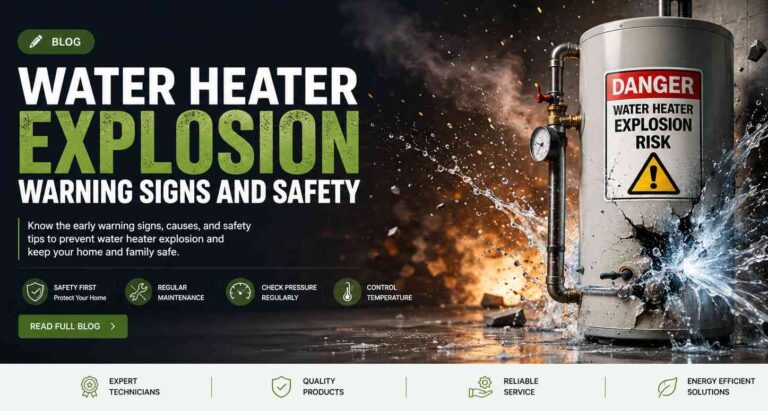
The explosion usually occurs when excessive pressure or gas buildup inside the tank is not released properly. Modern water heaters include safety devices, but neglecting maintenance can increase the risk.
Some common causes include:
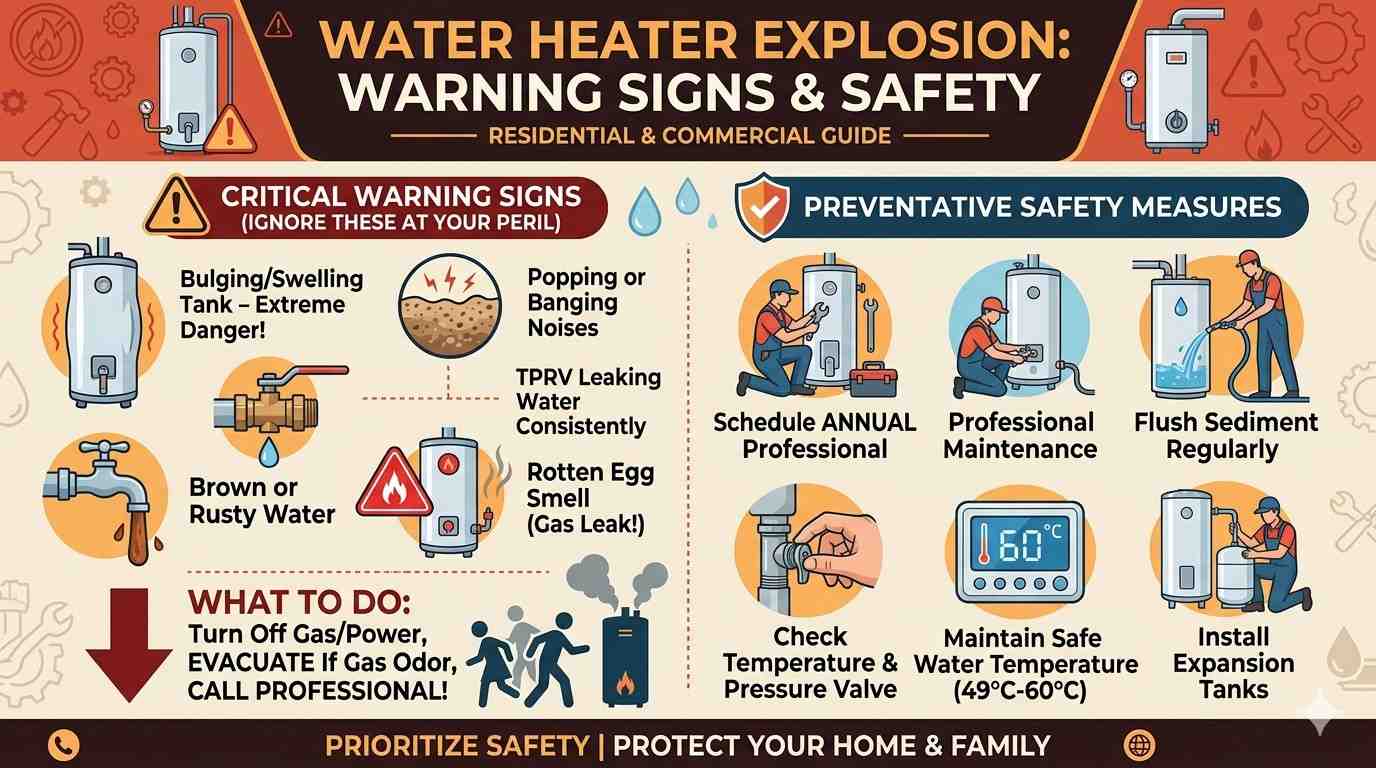
Recognizing the early warning signs can prevent a serious Water Heater Explosions.
Popping, banging, or rumbling sounds often indicate sediment buildup inside the tank. These noises should never be ignored.
Small leaks can indicate internal pressure issues or corrosion. Continuous leaking may eventually lead to a Water Heater Explosion.
Brown or rusty hot water may indicate corrosion inside the tank, weakening its structural integrity.
A sulfur or gas smell near the heater may indicate a gas leak. This is one of the most dangerous Water Heater Explosion warning signs.
If water becomes excessively hot unexpectedly, the thermostat or heating element may be malfunctioning.
A swollen or deformed tank is a critical sign of excessive pressure buildup and should be addressed immediately.
Occasional discharge is normal, but continuous leaking from the relief valve indicates dangerous pressure levels.
Preventive maintenance is the best way to avoid a Water Heater Explosion.
Professional servicing helps detect corrosion, leaks, pressure issues, and faulty components before they become dangerous.
Flushing removes sediment buildup that can increase pressure and overheating risks.
Test the valve regularly to ensure it releases pressure properly.
Set the thermostat between 49°C and 60°C for safe operation.
Expansion tanks help manage pressure fluctuations and reduce the risk of Water Heater Explosion incidents.
Older units are more vulnerable to corrosion and failure. Replacing outdated systems improves safety and efficiency.
The UAE’s climate and water conditions can affect heater performance. Hard water and continuous usage often accelerate sediment buildup and corrosion.
Choosing high-quality systems with anti-corrosion protection reduces long-term risks.
Professional inspections are highly recommended for villas, apartments, hotels, and commercial buildings.
Improper repairs can damage safety systems and increase the risk of a Water Heater Explosion.
Switching off the system when not in use reduces pressure buildup and saves energy.
If you notice any warning signs related to a potential Water Heater Explosion, take immediate action:
Quick action can prevent severe accidents and property damage.
Professional maintenance plays a critical role in preventing a Water Heater Explosion. Certified technicians can inspect:
Regular maintenance also improves energy efficiency and extends the lifespan of the system.
A Water Heater Explosion can cause serious injuries, fires, and extensive property damage if warning signs are ignored. Fortunately, most incidents are preventable through proper maintenance, regular inspections, and timely repairs.
Understanding the warning signs of a Water Heater Explosion — including strange noises, leaks, overheating, gas smells, and pressure issues — can help homeowners and businesses stay safe.
Whether you use electric, gas, or solar-powered systems, investing in professional maintenance and high-quality equipment is essential for long-term safety and performance.